
SI Joint Pain Treatment Denver
Finding the Source of That Deep, One-Sided Back Pain
SI joint pain is one of the most commonly misdiagnosed and misunderstood sources of low back and pelvic pain. If you've been dealing with a deep ache at the base of your spine, pain on one side of your lower back or buttock, or discomfort that flares with sitting, rolling over in bed, or climbing stairs — and nobody has been able to give you a clear answer — your sacroiliac joint may be the culprit. At Get Back Physical Therapy in Denver, we have the clinical tools to assess it properly and a treatment approach that actually addresses it.
What is SI Joint Pain?
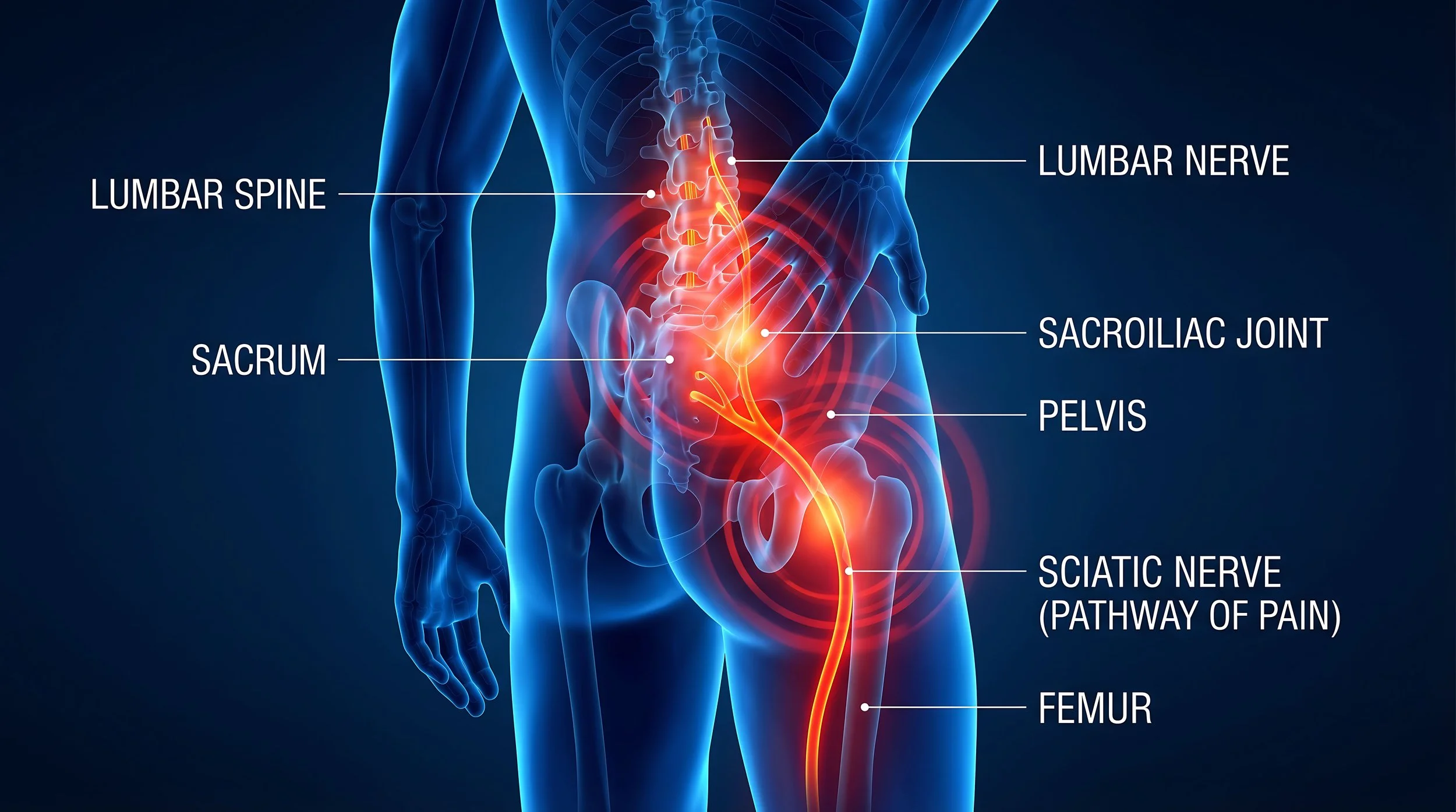
The sacroiliac joints connect the sacrum — the triangular bone at the base of your spine — to the iliac bones of the pelvis. These joints are designed for stability, not mobility, but they can become a significant source of pain when their load transfer is disrupted by muscle imbalance, hypermobility, trauma, or changes in activity level.
SI joint dysfunction is notoriously difficult to diagnose because the pain it produces can mimic low back pain, hip pain, and even sciatica. It tends to be localized to one side, often felt just below the belt line or deep in the glute, and frequently worsens with transitional movements like getting in and out of a car, standing from a chair, or single-leg activities like climbing stairs. Getting the diagnosis right is the foundation of effective treatment — and that requires a specific set of clinical tests that not every provider routinely performs.
Common presentations we work with include:
One-sided low back or buttock pain
Pain that worsens with prolonged sitting or standing
Discomfort with transitional movements and single-leg loading
SI joint pain during or after pregnancy
SI joint dysfunction in runners and cyclists
How We Treat SI Joint Pain at Get Back PT
Effective SI joint treatment requires identifying why the joint is being overloaded in the first place. That means assessing not just the joint itself but the surrounding musculature, movement patterns, and load distribution across the entire pelvis and lower extremity.
Your treatment plan may include:
Provocation and palpation testing to confirm SI joint involvement and rule out other sources of pain
Pelvic and hip movement assessment to identify the muscle imbalances and movement faults driving the dysfunction
Manual therapy and joint mobilization to restore normal joint mechanics and reduce pain
Targeted strengthening of the glutes, hip stabilizers, and deep core to restore load transfer through the pelvis
Gait and movement retraining for runners and active clients whose mechanics are contributing to SI overload
Education on load management so you understand how to modify activity without falling into unnecessary avoidance

Why Choose Get Back PT for SI Joint Pain in Denver?
SI joint pain often gets lost in the system — misdiagnosed as general low back pain, undertreated with generic exercise programs, or referred out for injections before conservative care has been given a real chance. As a cash-pay practice, we have the time and flexibility to assess this condition properly and build a treatment plan specific to your presentation rather than a protocol built for back pain in general.
Our integrated PT and training model also means that once your SI joint is stable and pain-free, we can transition you into a progressive strength program that reduces the likelihood of recurrence — without sending you somewhere else to do it. For runners and cyclists in particular, addressing the strength and movement factors that caused the problem in the first place is what keeps it from coming back.
Ready to Get to the Bottom of your SI Joint Pain?
If you've been dealing with stubborn one-sided back or pelvic pain in Denver and haven't gotten a clear answer yet, we'd love to take a closer look. Get Back Physical Therapy is accepting new patients now — no referral required.
SI joint pain is treatable. Let's find out what's driving yours and build a plan to fix it.
Our Team

Dr. Brett Green
Founder | Physical Therapist & Personal Trainer
Brett Green, PT, DPT, is the founder of Get Back PT & Performance in Denver. He created Get Back to bridge the gap between rehab and getting back to the things people actually enjoy, whether that’s running, lifting, sports, or everyday life.
His approach combines physical therapy, strength training, and performance to help clients feel better, get stronger, and keep moving forward.

Physical Therapist Assistant
Sam Heller
Sam Heller is a Physical Therapist Assistant and Personal Trainer with more than a decade of coaching experience. He combines strength training and rehab to help clients move better, build confidence, and stay active, especially when pain or uncertainty around exercise gets in the way.
Outside of work, Sam enjoys biking, lifting, and keeping up with his young son.