
Physical Therapy for
Shoulder Pain
In Denver Colorado

Shoulder pain can turn simple things like reaching overhead, sleeping on your side, lifting weights, or throwing a ball into something you suddenly have to think about.
At Get Back PT & Performance, we help people in Denver figure out what may be contributing to their shoulder pain and build a plan to get back to normal activity. That could mean improving strength, changing how you’re currently training, working on mobility, or gradually rebuilding tolerance to movements that have started bothering you.
The goal isn’t just to avoid everything that hurts. It’s to get your shoulder comfortable and capable enough to do the things you actually want to do.
What Does Shoulder Pain Feel Like?
Shoulder problems can show up in a lot of different ways. Some people notice a dull ache after workouts, while others only have pain when reaching overhead, throwing, pressing, or sleeping on that side.
Common symptoms include:
Pain when reaching overhead or behind your back
Shoulder pain during bench press, push-ups, or overhead pressing
Pain or weakness when lifting something away from your body
Discomfort when sleeping on the affected shoulder
Clicking or popping that is accompanied by pain
Stiffness or loss of shoulder motion
Pain after throwing, swimming, or other repetitive activity
You don’t necessarily need to wait until you can barely use your arm before getting it looked at.
Why Does My Shoulder Hurt?
There isn’t one universal cause of shoulder pain.
Symptoms can be influenced by changes in training volume, strength, mobility, throwing or overhead activity, previous injuries, work demands, or simply asking the shoulder to handle more than it is currently prepared for.
You may also hear terms like rotator cuff tendinopathy, impingement, labral injury, or bursitis. Those diagnoses can matter, but they don’t automatically tell us exactly what your treatment needs to look like.
We look at how your shoulder moves, how strong it is, what aggravates it, and what you’re trying to get back to before deciding what actually needs attention.
How We Treat Shoulder Pain
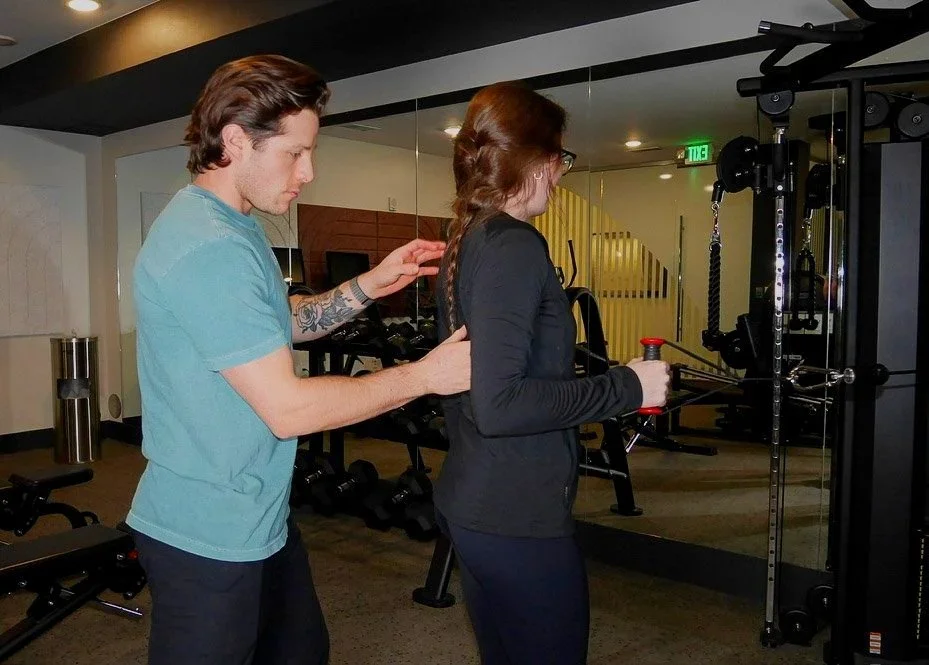
Physical therapy for shoulder pain at Get Back is based around gradually restoring movement, strength, and confidence.
Depending on what we find during your evaluation, treatment may include:
Rotator cuff and shoulder strengthening
Upper-back and shoulder mobility
Progressive resistance training
Changes to your lifting or training volume
Manual therapy
Dry needling when appropriate
Gradual return to throwing, lifting, sports, or overhead activity
We don’t automatically tell everyone with shoulder pain to stop lifting or avoid overhead movements forever. Sometimes those activities need to be modified for a while. Then we progressively build them back up.
Someone trying to sleep comfortably and work at a desk has very different demands than a baseball player trying to throw hard or a lifter trying to get back to overhead pressing. The plan should reflect that.
Frequently Asked Questions
-
Yes. Physical therapy can help identify what movements are bothering your shoulder, improve strength and mobility, and gradually rebuild your ability to use the arm normally. What treatment looks like depends on your symptoms and what you’re trying to get back to doing.
-
Yes. Many rotator cuff problems can be managed with progressive exercise and physical therapy. We’ll look at shoulder strength, motion, training demands, and symptoms to determine what makes sense rather than assuming every rotator cuff issue needs the same treatment.
-
Often, yes. You may need to modify certain exercises, weights, ranges of motion, or training volume temporarily. The goal is usually to find movements you can tolerate and progressively work back toward the exercises you want to do.
-
Yes. Get Back PT & Performance provides one-on-one physical therapy for shoulder pain and rotator cuff issues in Denver. Our approach combines rehab and strength training so the goal isn’t only to reduce symptoms — it’s to help you get back to using your shoulder normally.
-
There are a lot of possible reasons, including training volume, technique, strength, range of motion, or simply doing more than your shoulder is currently prepared to tolerate. Instead of automatically removing the exercise, we can look at what may need to change so you can work your way back to it.
-
Not necessarily. Completely resting the shoulder is not always the best answer. In many cases, modifying aggravating activities while continuing to train what you can tolerate is a better approach.
-
It depends on what is going on, how long you’ve had symptoms, and what activities you’re trying to return to. Some shoulder issues improve relatively quickly, while others need more time to rebuild strength and tolerance. We base progression on how you’re responding rather than giving everyone the same timeline.
-
If shoulder pain keeps coming back, affects sleep, limits workouts or sports, causes noticeable weakness, or makes everyday movements harder, an evaluation can help you figure out what’s going on and what to do next.
Our Team

Dr. Brett Green
Founder | Physical Therapist & Personal Trainer
Brett Green, PT, DPT, is the founder of Get Back PT & Performance in Denver. He created Get Back to bridge the gap between rehab and getting back to the things people actually enjoy, whether that’s running, lifting, sports, or everyday life.
His approach combines physical therapy, strength training, and performance to help clients feel better, get stronger, and keep moving forward.

Physical Therapist Assistant
Sam Heller
Sam Heller is a Physical Therapist Assistant and Personal Trainer with more than a decade of coaching experience. He combines strength training and rehab to help clients move better, build confidence, and stay active, especially when pain or uncertainty around exercise gets in the way.
Outside of work, Sam enjoys biking, lifting, and keeping up with his young son.

Get Back to Doing What You Love
Whether you want to return to the gym, running, hiking, skiing, sports, or simply get through your day more comfortably, we’ll help you figure out a plan that makes sense.