
Personal Training for Skiers
In Denver Colorado
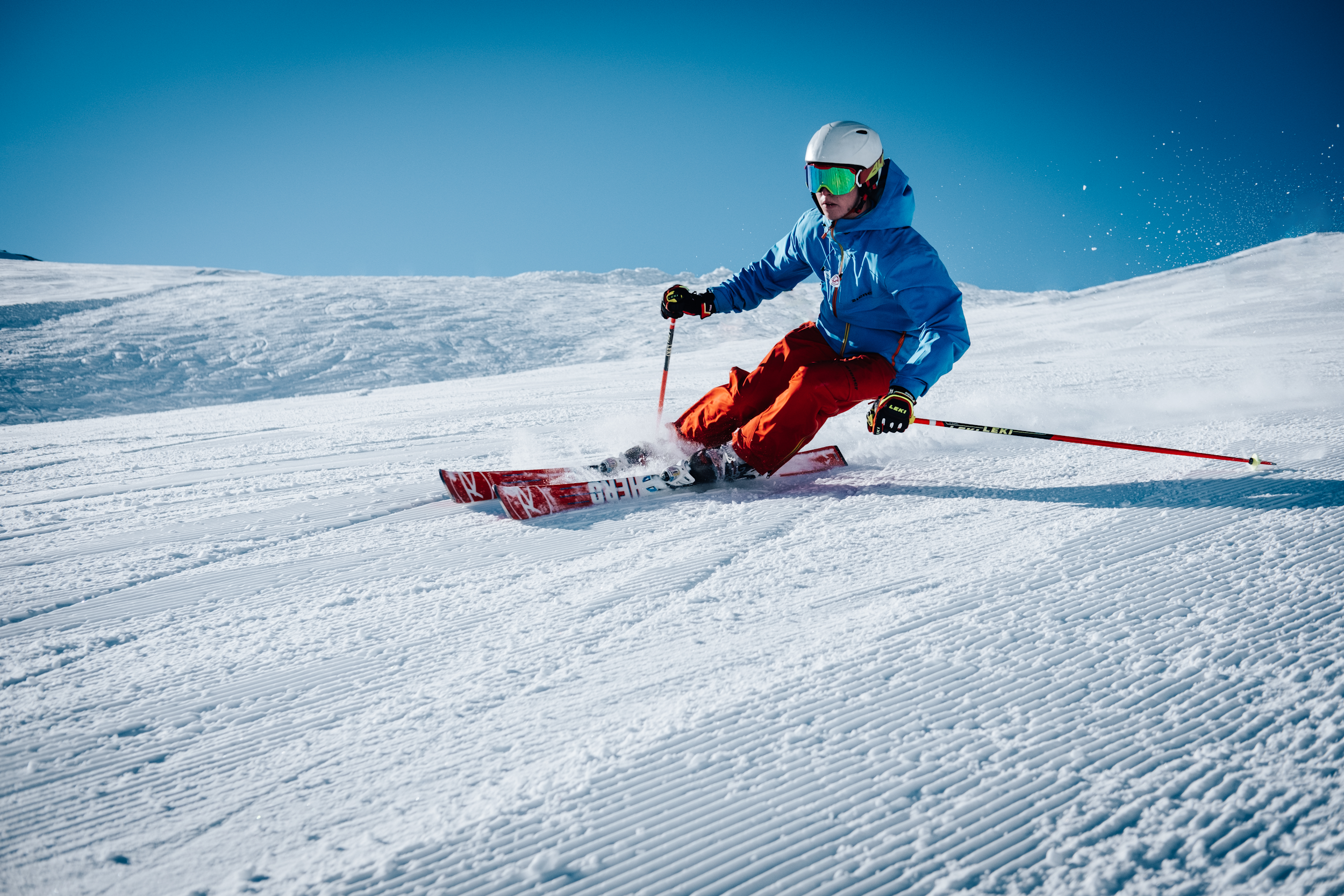
Every fall, a lot of Denver skiers do the same thing. They wait until a week before opening day, do a few wall sits, and hope their legs hold up.
Then the first powder day hits, their quads are on fire by 11am, and their knees feel shaky on the last run.
At Get Back PT + Performance, I help skiers in Denver build the strength and control to ski harder, ski longer, and stay healthy all season. As a Doctor of Physical Therapy and strength coach, I know what skiing demands from your legs and knees, and how to train for it.
What Skiing Actually Demands From Your Body
Skiing is a different kind of leg workout than most people expect.
A classic study of giant slalom racers (Berg et al., 1995) found that skiing is dominated by slow eccentric muscle actions, where your quads are working hard while lengthening to resist the forces of the turn. During each turn, the outside leg spent about twice as long in that eccentric "braking" phase as it did pushing.
That's why your thighs burn so much, and why squats alone don't fully prepare you. A good ski program builds heavy strength, slow controlled eccentric strength, and the ability to hold a low, balanced position while forces push you around.
Is Personal Training for Skiers Right for You?
This is a good fit if:
You want to get your legs ready before ski season starts
Your quads burn out early or your legs feel dead by the afternoon
You've had a knee injury or ACL reconstruction and want to ski confidently again
You're getting back on the mountain after time away and want to be ready for it
You want to ski harder terrain, moguls, trees, or backcountry
You're an older skier who wants to keep skiing for decades
If you're dealing with a current knee injury or recently had surgery, start with a physical therapy evaluation. We can help with that too.
Protecting Your Knees on the Mountain
Knee injuries are the most common skiing injuries. A 2019 review in Sports Health (Davey et al.) found that knee ligament injuries make up about 10% to 33% of all skiing injuries, with the ACL and MCL injured most often.
Most ski ACL injuries happen without any collision. They tend to happen when you get thrown in the backseat, catch an edge, or land a jump with your weight back.
You can't train away all of that risk, and good equipment matters too. But a 10-year study of 370 young ski racers (Raschner et al., 2012) found that lower core strength was linked to ACL injury. And across sports, ACL prevention training programs cut ACL injury risk roughly in half (Webster and Hewett, 2018). Those programs weren't studied in recreational skiers specifically, but the ingredients (strength, landing control, balance, and core work) are exactly what we build.
Fatigue Matters Too
Injuries in ski racers happen more often in the last part of a race, which suggests fatigue plays a role. Many recreational skiers know the feeling of "one last run" on tired legs.
Stronger legs with more endurance mean you're less likely to be skiing on empty in the afternoon. That's not a guarantee, but it's one of the factors you can actually control.

How We Train Skiers
We start with your skiing goals, your injury history, and how you move. Then we build a plan that fits your season.
Your plan may include:
Heavy strength training for your legs and hips
Slow eccentric work to prepare your quads for long turns
Single leg strength and balance
Core strength and trunk control
Jumping and landing practice to build knee control
Conditioning so your legs last all day
A plan that builds in the fall and keeps you strong during the season
Preseason is the best time to build strength, but it's never too late to start. During the season, one or two sessions a week can help you keep your strength. You can train with us in person at our Jefferson Park studio, at home, or virtually.
Physical Therapy and Personal Training Under One Roof
If you get hurt on the mountain, you don't have to start over with a new provider. Physical therapy and personal training happen at Get Back, so we can take you from rehab back to strong, ski ready legs.
Related reading: Ski Season Conditioning: Personal Training Tips for Denver Athletes · Ski Season Prep Workout for Women · Recovering from Ski Injuries?
Frequently Asked Questions About Personal Training for Skiers
-
Ideally 6 to 8 weeks or more before your first ski day, so you have time to build strength. But it's never too late. Training during the season still helps.
-
Squats, split squats, deadlifts, step downs, single leg work, and core training are common staples. Slow eccentric work and jumping and landing practice help prepare you for what skiing really demands.
-
Skiing relies heavily on eccentric muscle work, where your quads resist force while lengthening. That's demanding, especially if your legs aren't used to it. Building strength and eccentric control helps.
-
It may lower your risk, but it can't eliminate it. ACL prevention programs that include strength, balance, and landing training reduce ACL injuries in other sports. Good equipment, properly adjusted bindings, and skiing within your ability matter too.
-
Many people do. Returning to skiing safely usually takes a progressive plan that rebuilds strength, control, and confidence. We can help you get there.
-
Yes. One or two strength sessions a week can help you hold onto your strength and keep your legs fresh through spring.
-
Yes. Backcountry skiing adds long climbs and heavy packs, so we add more uphill conditioning and endurance to your strength work.
-
Yes. Get Back PT + Performance offers one-on-one personal training for skiers at our Jefferson Park studio in Denver, close to Highlands, LoHi, and Sloan's Lake, with in-home and virtual options available.
-
No. Personal training does not require a referral.
-
Personal training for skiers is priced the same as our regular personal training sessions. You can find current pricing on our personal training page.
Our Team

Dr. Brett Green
Founder | Physical Therapist & Personal Trainer
Brett Green, PT, DPT, is the founder of Get Back PT & Performance in Denver. He created Get Back to bridge the gap between rehab and getting back to the things people actually enjoy, whether that’s running, lifting, sports, or everyday life.
His approach combines physical therapy, strength training, and performance to help clients feel better, get stronger, and keep moving forward.

Physical Therapist Assistant
Sam Heller
Sam Heller is a Physical Therapist Assistant and Personal Trainer with more than a decade of coaching experience. He combines strength training and rehab to help clients move better, build confidence, and stay active, especially when pain or uncertainty around exercise gets in the way.
Outside of work, Sam enjoys biking, lifting, and keeping up with his young son.

Get Back to Doing What You Love
Whether you want to return to the gym, running, hiking, skiing, sports, or simply get through your day more comfortably, we’ll help you figure out a plan that makes sense.