
Strength Training for Runners
In Denver Colorado

Most runners know they should be lifting. Very few actually do it consistently.
Maybe you tried a few bodyweight lunges and clamshells and it never felt like it was doing much. Maybe you're worried lifting will make you heavy, sore, or slow. Or maybe you only think about strength training after something starts hurting.
At Get Back PT + Performance, I help runners in Denver build real strength that fits around their mileage. As a Doctor of Physical Therapy and run coach, I program lifting that supports your running instead of competing with it, and I know how to keep you training when your body starts complaining.
Does Strength Training Make You a Better Runner?
The research here is pretty consistent.
A 2024 meta-analysis in Sports Medicine (Llanos-Lagos et al.) pooled 31 studies of middle and long distance runners. Heavy strength training (lifting around 80% of your max or more), plyometrics, and programs that combined methods all improved running economy, which is how much energy it costs you to run at a given pace. Lighter, high rep strength work didn't show a clear benefit.
One classic study (Støren et al., 2008) had well trained distance runners add heavy half squats, four sets of four reps, three times a week. After eight weeks, their running economy improved by 5% and they could run about 21% longer at their maximal aerobic speed. Their body weight didn't change.
In other words, the strength work that helps runners most is heavier than what most runners are doing.
Is Strength Training for Runners Right for You?
This is a good fit if:
You run regularly and know you should be lifting but don't know where to start
You're training for a half marathon, marathon, trail race, or ultra
You keep dealing with the same aches in your knees, hips, shins, Achilles, or feet
You want to get faster or feel stronger late in races
You're a masters runner and want to stay strong and keep running for decades
You're coming back from a running injury and want to build capacity before ramping up mileage
If you're dealing with a current injury that's changing how you run, start with a physical therapy evaluation. We can help with that too.
Will Lifting Make Me Bulky or Slow?
This is the most common worry I hear, and it usually isn't a problem.
Building a lot of muscle takes a lot of focused training, eating, and time, and running at the same time makes it even harder. Most runners who lift heavy get stronger without gaining much size at all. In the Støren study above, runners got stronger and more economical without any change in body weight.
The bigger risk is the opposite: doing strength work that's too light to make much of a difference.
Can Strength Training Prevent Running Injuries?
I want to be honest here, because this gets overstated a lot.
A large review of injury prevention trials across sports (Lauersen et al., 2014) found that strength training reduced sports injuries to less than a third, which is a big effect. But that review wasn't specific to runners, and only a handful of the trials looked at strength training on its own.
For runners specifically, the evidence is more mixed. A randomized trial of 720 first time New York City Marathon runners (Toresdahl et al., 2020) found that a short, self-guided home strength routine didn't reduce overuse injuries that kept people from finishing. Many participants didn't do it consistently, and the program was light.
My take: strength training probably helps you handle more running, but it isn't a magic shield. Injury risk also depends on how quickly you increase your mileage and intensity, how well you recover, and how your body responds. That's why we look at your whole training load, not just your lifting.
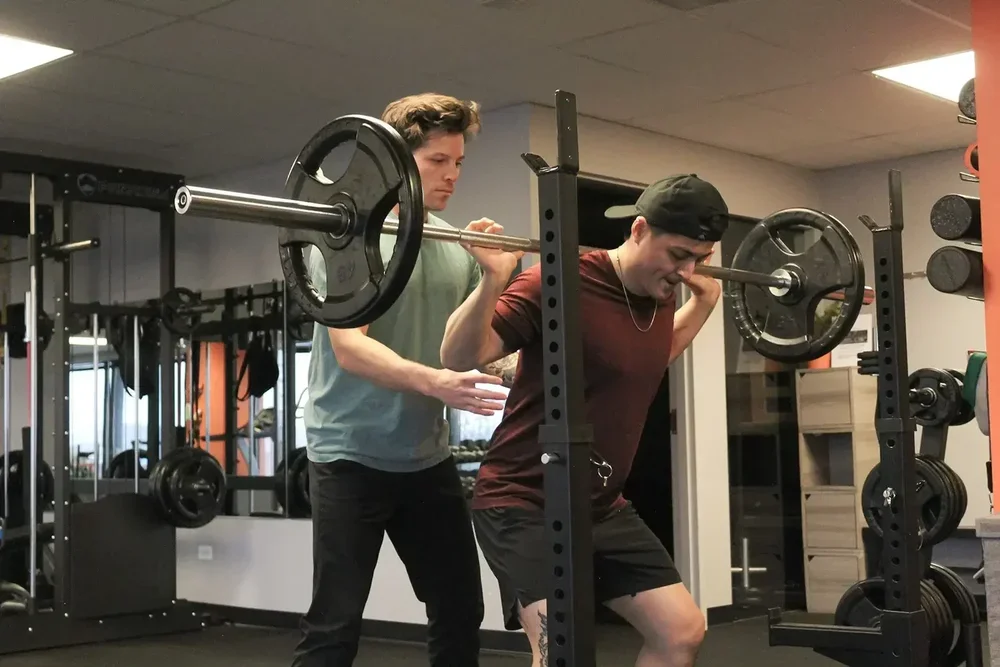
How We Train Runners
We start with your running. We look at your weekly mileage, your race calendar, your injury history, and how you move, then build a strength plan that fits around it.
Your plan may include:
Heavy, low rep strength training for your legs and hips
Calf and Achilles strength work, which runners often neglect
Plyometrics and jumping to build stiffness and spring
Single leg strength and balance
Lifting that scales up in the off season and down during race weeks
A plan for working around aches and pains so you can keep running
Most runners do well with two strength sessions a week, often fewer during peak training or taper. We can train in person at our Jefferson Park studio, at home, or virtually, and we can coordinate your lifting with your run coaching if you work with us on that too.
Physical Therapy, Run Coaching, and Strength Under One Roof
If you get hurt, you don't have to start over with a new provider. Physical therapy, run coaching, and strength training all happen at Get Back, so the person writing your lifting program understands your running and your injury history.
Related reading: The Return to Running Roadmap After an Injury · If I Start Running or Doing Cardio, Will I Lose All My Strength? · Run Coaching
Frequently Asked Questions About Strength Training for Runners
-
Yes. Research shows that strength training, especially heavier lifting and plyometrics, improves running economy in distance runners. It also helps build the capacity your muscles, tendons, and bones need to handle training.
-
Most runners do well with two sessions a week. During peak training or race week, one session is often enough to maintain strength.
-
Usually not. Most runners who lift get stronger without gaining much size, especially while they're also running regularly. Studies of runners doing heavy strength training have found improved running economy with no change in body weight.
-
Heavier lifting tends to work better. Research shows heavy strength training (around 80% of your max or more) improves running economy, while light, high rep work shows less benefit. We build up to heavier loads gradually.
-
It may help, but it isn't a guarantee. Strength training reduces injuries in sports overall, but studies in runners are mixed. Managing how fast you increase mileage and intensity matters too.
-
Squats, deadlifts, split squats, step ups, calf raises, and plyometrics are common staples. The best program depends on your goals, your experience, and any injuries.
-
Often, yes. Many runners do well lifting on the same day as a hard run, so easy days stay easy. We plan your sessions around your running schedule.
-
Yes. We adjust your lifting through each phase of training, then cut back during your taper so you show up fresh on race day.
-
Yes. Get Back PT + Performance offers one-on-one strength training for runners at our Jefferson Park studio in Denver, close to Highlands, LoHi, and Sloan's Lake, with in-home and virtual options available.
-
Strength training for runners is priced the same as our regular personal training sessions. You can find current pricing on our personal training page.
Our Team

Dr. Brett Green
Founder | Physical Therapist & Personal Trainer
Brett Green, PT, DPT, is the founder of Get Back PT & Performance in Denver. He created Get Back to bridge the gap between rehab and getting back to the things people actually enjoy, whether that’s running, lifting, sports, or everyday life.
His approach combines physical therapy, strength training, and performance to help clients feel better, get stronger, and keep moving forward.

Physical Therapist Assistant
Sam Heller
Sam Heller is a Physical Therapist Assistant and Personal Trainer with more than a decade of coaching experience. He combines strength training and rehab to help clients move better, build confidence, and stay active, especially when pain or uncertainty around exercise gets in the way.
Outside of work, Sam enjoys biking, lifting, and keeping up with his young son.

Get Back to Doing What You Love
Whether you want to return to the gym, running, hiking, skiing, sports, or simply get through your day more comfortably, we’ll help you figure out a plan that makes sense.