
Personal Training for Golf
In Denver Colorado
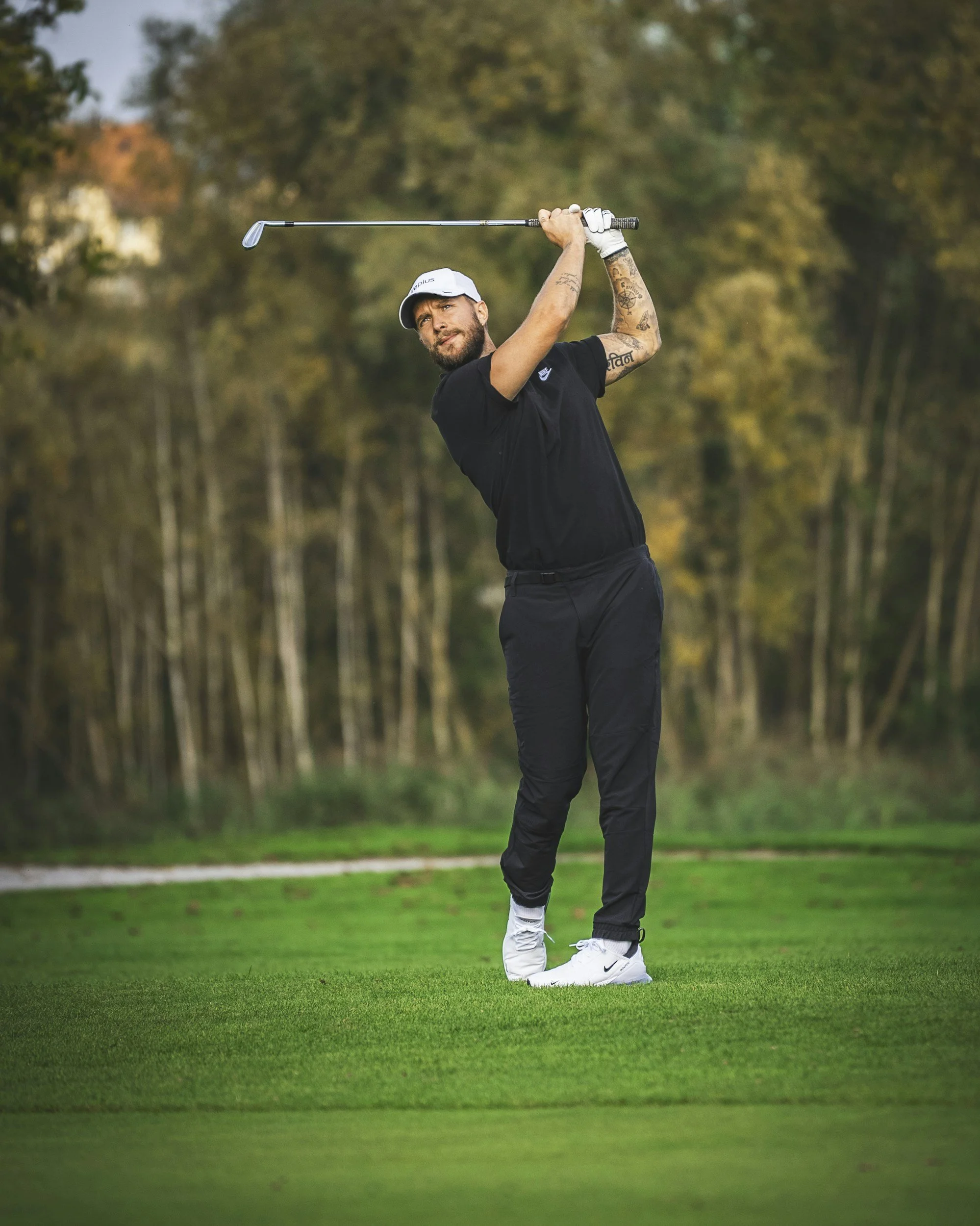
Golf looks easy on the body until you add up what a season really involves: hundreds of full-speed swings, hours of walking, and long days at the range.
Then come the stiff low backs, sore elbows, cranky wrists, and hips that do not want to turn.
At Get Back PT + Performance, we help Denver golfers play without pain, add clubhead speed, and stay on the course for years. Your sessions are led by Dr. Brett Green, PT, DPT, who works with high-level golfers and specializes in low back pain, so we can train you around old injuries instead of just pushing harder.
Not sure yet? Book a free 15-minute discovery call.
What Golf Actually Demands From Your Body
The golf swing is a fast, powerful rotation that starts at the ground and moves through the legs, hips, trunk, and arms. Good swings depend on hip and upper back mobility, a strong lead leg to rotate into, and enough trunk strength to control all that speed.
When one link is limited, other areas pick up the slack. A stiff upper back or hips can mean more load through the low back, and a weak grip and forearm can mean more stress at the elbow and wrist.
Is Golf Training Right for You?
This is a good fit if:
You are dealing with low back, hip, shoulder, elbow, wrist, or knee pain that flares up after golf
You want more clubhead speed and distance
You want to play more rounds with less soreness the next day
You are getting back on the course after an injury, surgery, or physical therapy
You play competitively and want a structured off-season and in-season plan
If you have pain that is getting worse, we recommend starting with a physical therapy evaluation so we can figure out what is going on before building your training plan.
The Most Common Golf Injuries
The low back is the most commonly injured area in golf at every level. A 2023 review in the Aspetar Sports Medicine Journal (Robinson and colleagues) reports that in amateur golfers, about 37 percent of injuries involve the low back, followed by the knee and shoulder. Elbow and hand or wrist problems are also common, and the same review estimates that 16 to 41 percent of amateur golfers are injured each year.
The good news is that most golf injuries are overuse problems that respond well to a smarter plan: more strength and mobility where your swing needs it, and a gradual build in how much you practice and play. Pain does not automatically mean damage, and in most cases the answer is not to quit golf, but to build more capacity.
Strength training adds speed, too. A 2020 systematic review in the Journal of Sports Sciences found that strength and conditioning programs improved clubhead speed, ball speed, and distance by roughly 4 to 6 percent on average. For most golfers, that is real yardage without changing your swing.
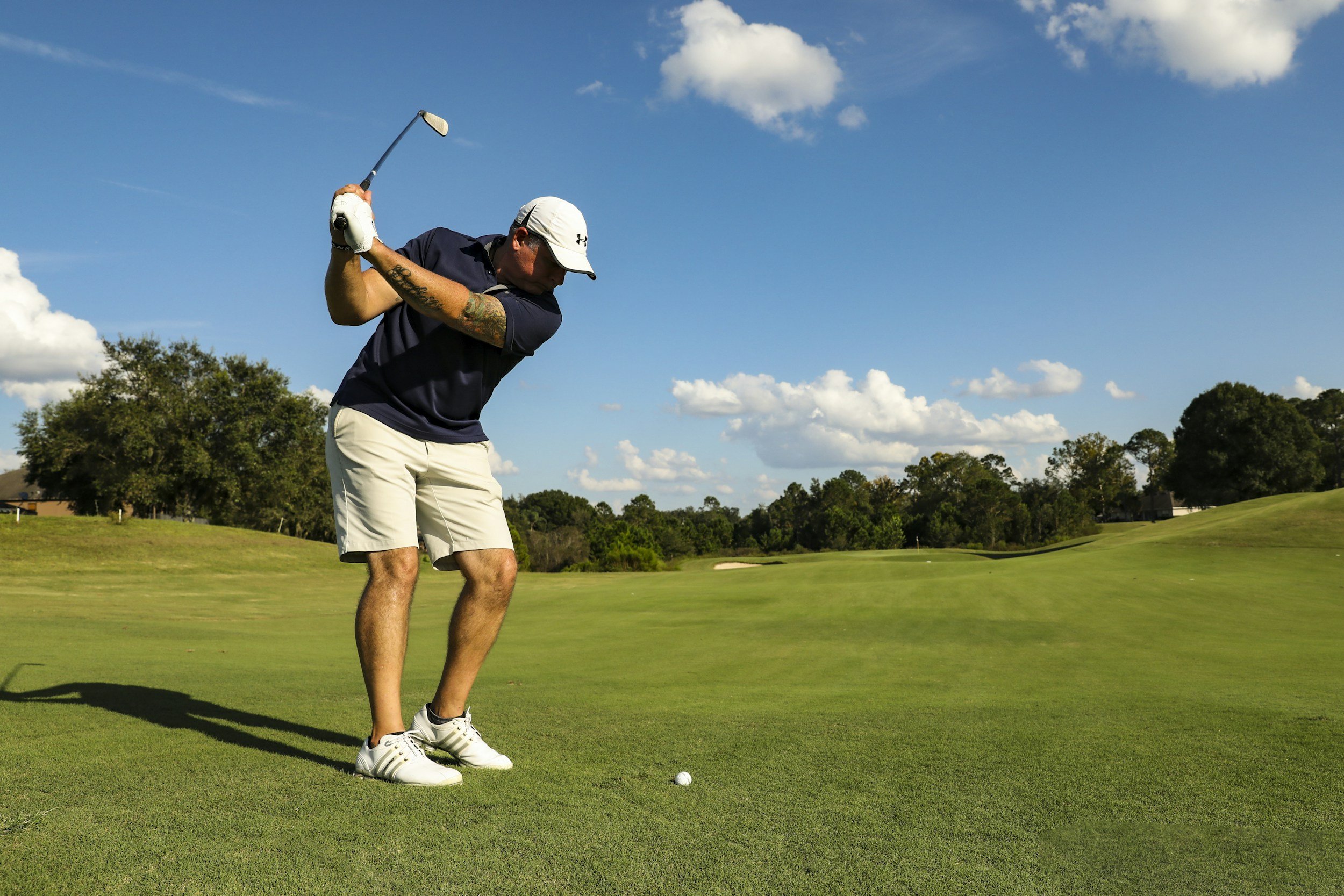
How We Train Golfers
We start with your golf goals, your injury history, and how you move. Then we build a plan around how often you play and practice.
Low back resilience: progressive trunk and hip strength so your back can handle more swings
Lower body strength and power: squats, hinges, lunges, and jumps that drive clubhead speed
Rotational power: medicine ball throws and cable work for speed you can control
Hip and upper back mobility: the range your backswing and follow-through actually use
Lead leg and knee strength: so you can rotate into a stable front side
Grip, forearm, and shoulder strength: to reduce elbow and wrist irritation
Conditioning: so you still feel good on the back nine
We train golfers in person at our Jefferson Park studio.
Physical Therapy and Personal Training Under One Roof
Because our team is led by a Doctor of Physical Therapy, one clinician handles both the pain and the performance. We can adjust quickly when your back flares up, without sending you somewhere else.
You might also like our return to sport training programs, or our guide to what a personal trainer costs in Denver.
Frequently Asked Questions About Golf Training
-
Build strength in your legs, hips, and trunk, keep the mobility your swing needs, warm up before you play, and increase practice volume gradually instead of all at once.
-
Most golfers benefit from heavy lower body lifts, rotational medicine ball throws, trunk strength, hip and upper back mobility, and grip work. The right mix depends on your body and your goals.
-
Usually it is a mismatch between how much you are swinging and what your back and hips are currently built to handle. In most cases it is not a sign of serious damage, and it responds well to a plan that builds capacity.
-
No. Swing changes are your golf coach’s job. We build the strength, mobility, and pain management that help your body do what your coach is asking.
-
Yes. Research shows strength and conditioning programs improve clubhead speed and distance on average, especially when they include lower body and rotational power work.
-
In most cases, yes. We adjust how much you play and practice so you can keep golfing while you get better.
-
Both. Training is built around your goals and current fitness.
-
Absolutely. Strength, balance, and mobility training help older golfers keep swinging well and keep playing for years.
-
No. Personal training does not require a referral, and in Colorado you can also see a physical therapist directly without one.
-
Your first session is $150 and single sessions are $130, with discounted 10 and 20 session packages. See our full breakdown in how much a personal trainer costs in Denver, or book a free 15-minute discovery call.
Our Team
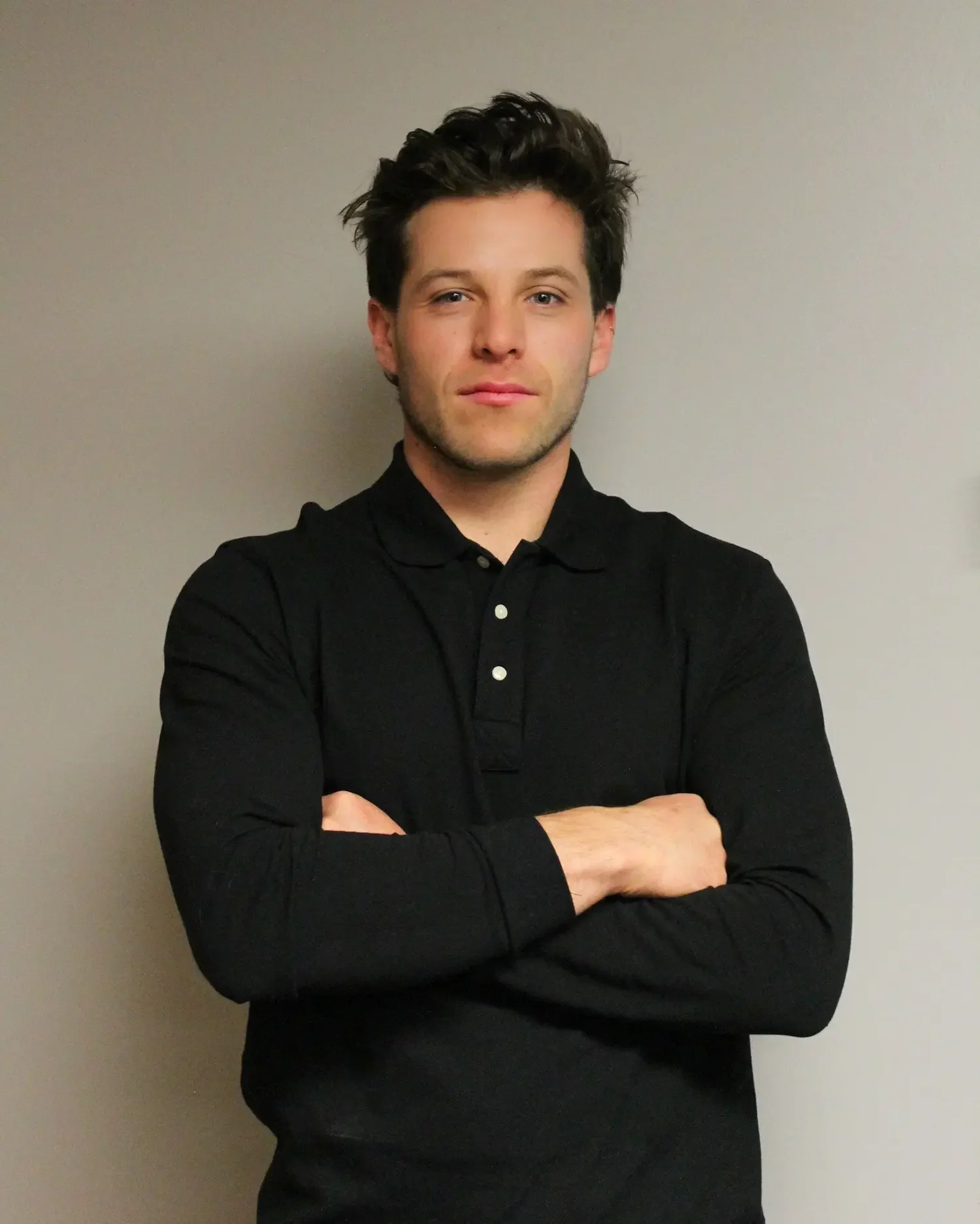
Dr. Brett Green
Founder | Physical Therapist & Personal Trainer
Brett Green, PT, DPT, is the founder of Get Back PT + Performance and a former college baseball player. He specializes in low back pain, knee injury rehab and prevention, and running injuries, and works with high-level baseball players and golfers.
He also works with people with all kinds of needs, combining evidence-based physical therapy with strength training to help clients feel better, get stronger, and keep moving forward.
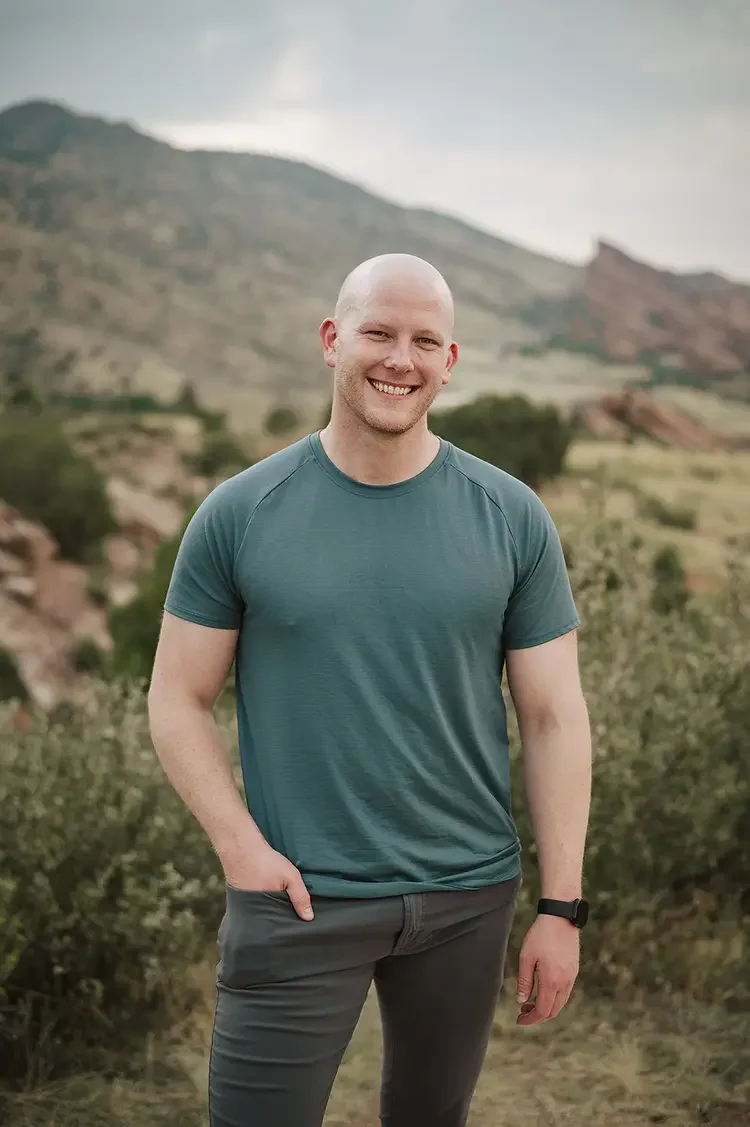
Physical Therapist Assistant
Sam Heller
Sam Heller is a Physical Therapist Assistant, strength coach, and former college track athlete with more than a decade of coaching experience. He specializes in powerlifting coaching, strength training for beginners, and strength training for older adults, and works with people with all kinds of needs.
Outside of work, Sam enjoys biking, lifting, and keeping up with his young son.

Get Back to Your Best Golf
Whether you want more speed, fewer aches, or a stronger body for the game, we will help you build a plan that makes sense.