
Personal Training for Pickleball
In Denver Colorado
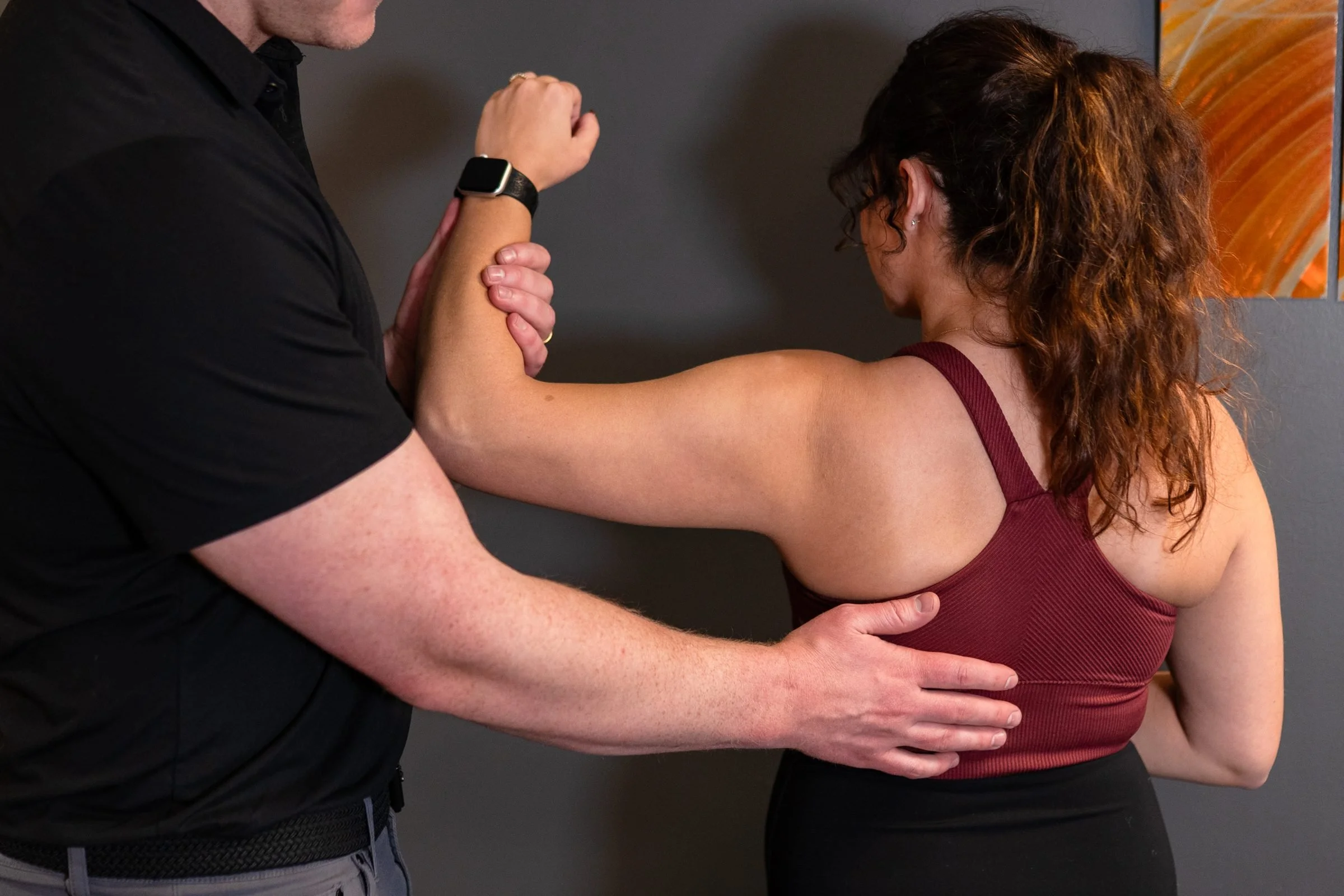
Pickleball is easy to pick up, which is exactly why so many Denver players jump straight into three-hour open play sessions with no preparation.
Then come the sore calves, cranky elbows, tweaked backs, and the occasional fall chasing a lob.
At Get Back PT + Performance, we help Denver pickleball players build the strength, speed, and balance to play more often, move better on the court, and stay off the injury list. Our team is led by a Doctor of Physical Therapy, so we know how to train you around old injuries and nagging pain, not just push you harder.
Not sure yet? Book a free 15-minute discovery call.
What Pickleball Actually Demands From Your Body
Pickleball looks gentle, but it is a sport of short sprints, quick stops, lateral shuffles, lunges at the kitchen line, and repeated overhead and backhand swings. Those fast changes of direction load the calves, Achilles tendons, knees, and hips, and the repeated swinging loads the shoulder, elbow, and wrist.
It is also one of the fastest growing sports in the country. According to the Sports and Fitness Industry Association, about 24.3 million Americans played pickleball in 2025, more than double the number from just three years earlier. With that growth has come a lot more injuries, especially in players who ramp up how often they play faster than their bodies can adapt.
Is Personal Training for Pickleball Right for You?
This is a good fit if:
You are new to pickleball and want to build a base before playing more often
You play several times a week and keep dealing with sore calves, knees, or elbows
You are worried about falling or want to feel steadier moving backward and side to side
You have an old ankle, knee, back, or shoulder injury that flares up after playing
You are getting back on the court after an injury, surgery, or physical therapy
You want more speed, power, and endurance for tournaments or competitive play
If you have a current injury or pain that is getting worse, we recommend starting with a physical therapy evaluation so we can figure out what is going on before building your training plan.
The Most Common Pickleball Injuries
Most pickleball injuries are not dramatic. They are sprains, strains, and overuse problems that build up over time. In an analysis of emergency department visits for pickleball-related lower body injuries, Forrester (2021) found that about 76 percent were sprains or strains, and nearly 79 percent of patients were 60 or older. Calf strains, Achilles problems, ankle sprains, knee pain, low back pain, and elbow irritation are some of the most common issues pickleball players deal with.
The good news is that most of these respond well to a smarter plan: stronger calves and legs, better balance and footwork, and a gradual increase in how often and how long you play. Pain does not automatically mean damage, and in most cases the answer is not to quit playing, but to build more capacity.
Falls, Balance, and Bone Health
Backpedaling for a lob is one of the riskiest moves in the game. Balance training, reactive footwork, and leg strength help you stay on your feet, and resistance training also supports bone health as you age. For players with low bone density, we also offer osteoporosis strength training.
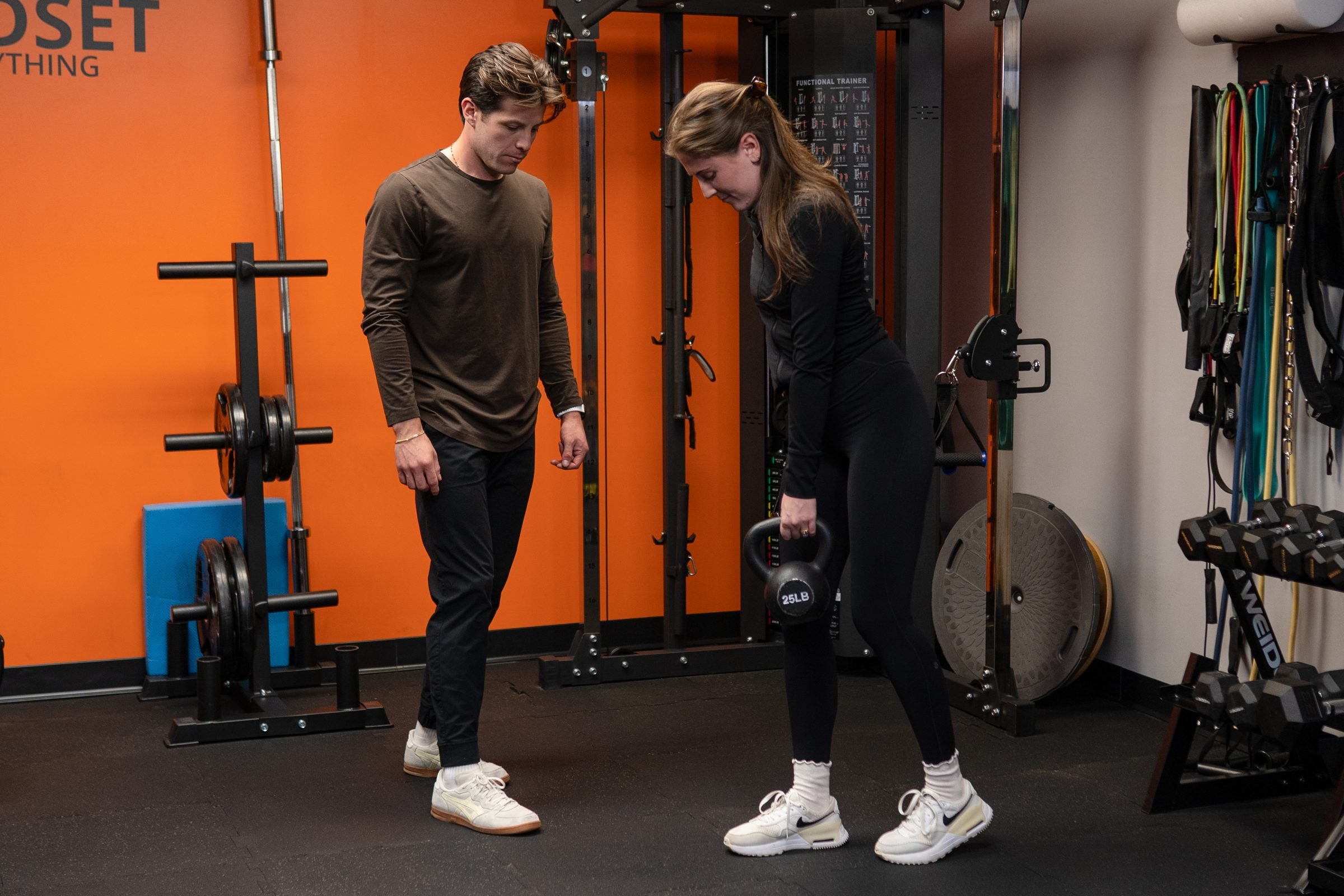
How We Train Pickleball Players
We start with your pickleball goals, your injury history, and how you move. Then we build a plan around how often you play and what you want to get better at.
Calf and Achilles strength: heavy and fast calf work to handle sprints, stops, and split steps
Leg and hip strength: squats, lunges, and hinges for a lower, stronger ready position
Lateral speed and footwork: shuffles, crossovers, and change-of-direction drills
Balance and fall prevention: single-leg and reactive balance work, including moving backward safely
Shoulder, elbow, and grip strength: to handle repeated swinging and reduce elbow and wrist irritation
Rotational power and core: for drives and overheads
Conditioning: so you are still moving well in your last game of the day
We train pickleball players in person at our Jefferson Park studio, in your home, or virtually.
Physical Therapy and Personal Training Under One Roof
Because our team is led by a Doctor of Physical Therapy, we can train you around old injuries and adjust quickly if something flares up, without sending you somewhere else. Rehab and performance training happen in the same place, with the same people.
You might also like our personal training for older adults, personal training with knee pain, and return to sport training programs, or our guide to what a personal trainer costs in Denver.
Frequently Asked Questions About Personal Training for Pickleball Players
-
Warm up before you play, build calf, leg, and shoulder strength two to three times per week, and increase how often and how long you play gradually. Balance and footwork training help reduce the risk of falls, especially when moving backward.
-
Calf raises, split squats, lateral lunges, step-ups, single-leg balance work, rows, and rotator cuff and grip exercises cover most of what pickleball players need. The best plan depends on your goals, history, and how often you play.
-
Pickleball involves lots of quick starts, stops, and split steps, which load the calves and Achilles tendons. If you play more than your legs are currently prepared for, they can get irritated. Progressive calf strengthening and a gradual increase in playing time usually help. If pain is sudden or severe, get it checked.
-
Often, yes. Elbow pain from pickleball is usually an overuse problem. Gradually strengthening the forearm, grip, and shoulder, along with managing how much you play, helps many players. If pain persists, a physical therapy evaluation is a good next step.
-
Yes, for most people. It is a great way to stay active and social. Building strength, balance, and footwork before and while you play helps you enjoy it longer with less risk of falls and overuse injuries.
-
Yes. One or two short strength sessions per week help you keep up with the demands of frequent play and recover better between sessions.
-
Yes. We build speed, power, conditioning, and durability around your tournament schedule so you can play your best when it counts.
-
Yes. We train pickleball players at our studio in Jefferson Park, near Highlands and Sloan's Lake, and we also offer in-home and virtual training.
-
No. Personal training does not require a referral.
-
Your first session is $150 and single sessions are $130, with discounted 10 and 20 session packages. See our full breakdown in how much a personal trainer costs in Denver, or book a free 15-minute discovery call.
Our Team

Dr. Brett Green
Founder | Physical Therapist & Personal Trainer
Brett Green, PT, DPT, is the founder of Get Back PT + Performance and a former college baseball player. He specializes in low back pain, knee injury rehab and prevention, and running injuries, and works with high-level baseball players and golfers.
He also works with people with all kinds of needs, combining evidence-based physical therapy with strength training to help clients feel better, get stronger, and keep moving forward.
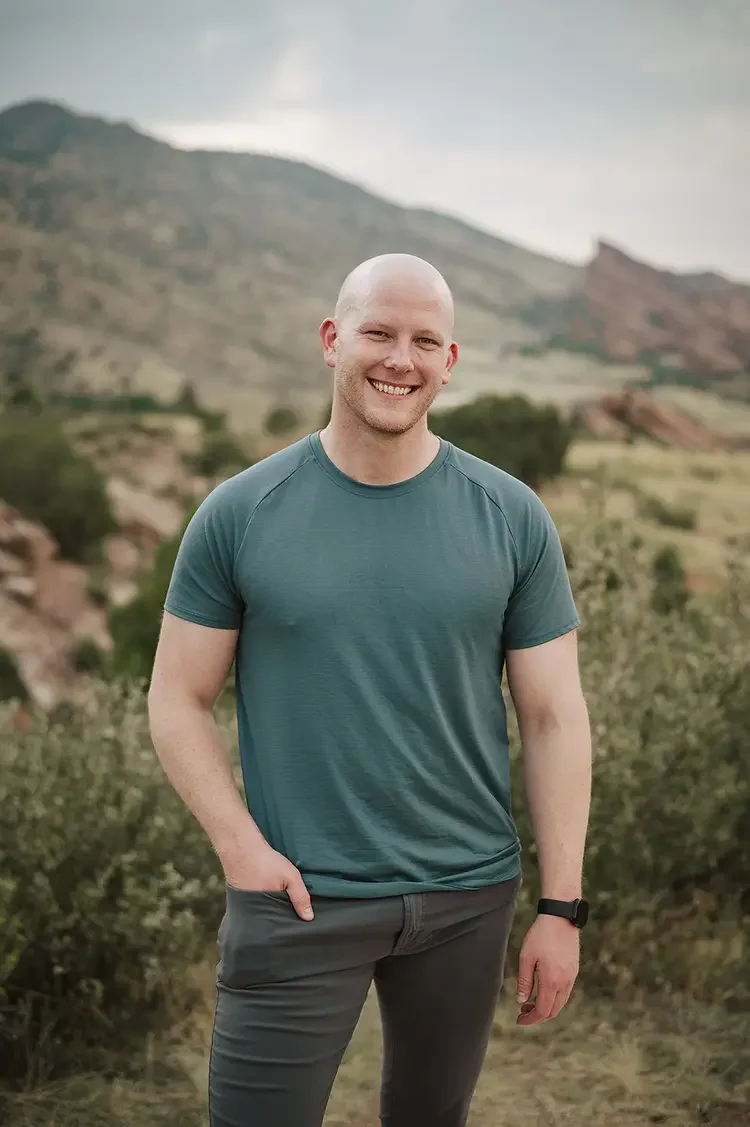
Physical Therapist Assistant
Sam Heller
Sam Heller is a Physical Therapist Assistant, strength coach, and former college track athlete with more than a decade of coaching experience. He specializes in powerlifting coaching, strength training for beginners, and strength training for older adults, and works with people with all kinds of needs.
Outside of work, Sam enjoys biking, lifting, and keeping up with his young son.

Get Back to Doing What You Love
Whether you want to return to the gym, running, hiking, skiing, sports, or simply get through your day more comfortably, we’ll help you figure out a plan that makes sense.