
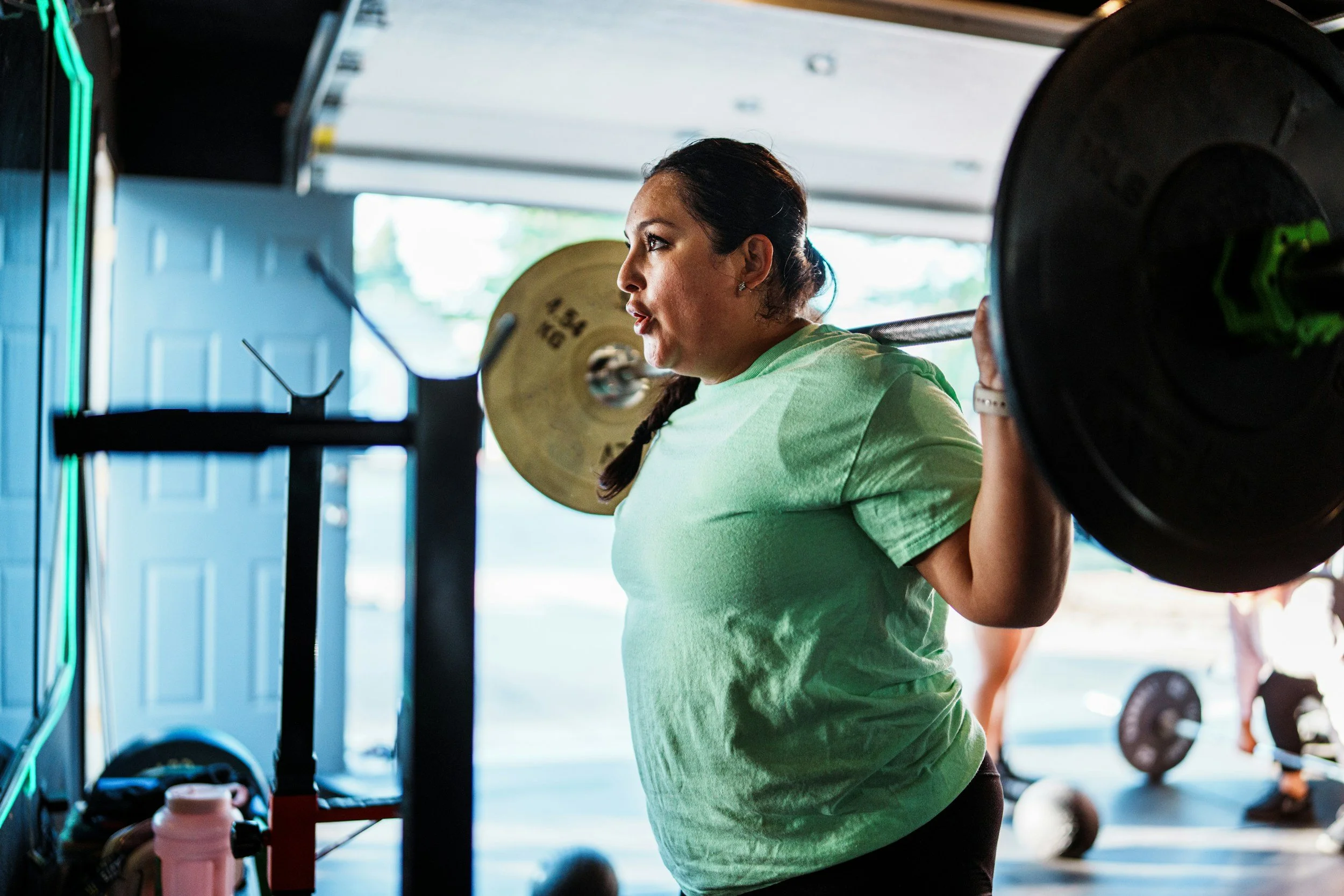
Menopause changes how your body holds on to muscle and bone. Strength training is one of the best tools we have to push back.
A lot of the women we work with tell us the same things. They are sleeping worse, feeling weaker, gaining weight around the middle, and dealing with aches that did not used to be there. Some have been told to "just walk more." Others have never lifted a weight and are not sure where to start.
We start with where you are now. You train one-on-one with a Doctor of Physical Therapy, so your program fits your body, your joints, and your schedule.
Not sure yet? Book a free 15-minute discovery call.
Why Strength Training Matters During Menopause
As estrogen drops, the body loses bone faster and holds on to muscle less easily.
Bone. In the Study of Women's Health Across the Nation (SWAN), women lost about 2% of their spine bone density per year in the late perimenopause and early postmenopause years. That is the fastest bone loss most women will ever have.
The good news is that bone responds to load. In the LIFTMOR trial, postmenopausal women with low bone mass did supervised heavy lifting (5 sets of 5 reps) twice a week for 8 months. Their spine bone density went up 2.9%, while the low-intensity home exercise group lost 1.2%. They also got stronger and did better on balance and sit-to-stand tests, with only one minor back spasm reported.
Muscle, Hot Flashes, and Everyday Life
Muscle. SWAN also found that fat gain speeds up and lean mass starts to drop as the menopause transition begins, and those trends continue until about two years after the final period. Strength training is the most direct way to keep and build muscle through that window.
Hot flashes. In a 15-week randomized trial from Sweden, women who lifted three times a week cut their daily hot flashes and night sweats by about 40%. The control group saw almost no change.
Everyday life. Stronger legs, hips, and back make stairs, carrying groceries, hiking, and getting off the floor easier. That matters now and decades from now.
Strength training is not a replacement for medical care. If you are considering hormone therapy, bone medication, or other treatment, that conversation belongs with your doctor. Lifting works alongside it.
Is Menopause Strength Training Right for You?
This is a good fit if:
You're in perimenopause, menopause, or the years after
You feel weaker than you used to, or you're losing muscle even though you're active
You've been told you have low bone density, osteopenia, or osteoporosis
You've never lifted weights, or it's been years
Achy joints, back pain, or an old injury make you unsure what's safe
You want a plan built around your energy, sleep, and schedule, not a generic class

Strength Training Without Ignoring Pain
Joint aches, stiffness, and back or shoulder pain often show up around menopause. A lot of women stop exercising because of it, and less movement usually makes things worse.
Because Get Back combines physical therapy and personal training, we can work around pain instead of telling you to stop. We adjust exercises, range of motion, and load so you can keep training while things settle down.
If you notice leaking or pelvic pressure when you lift, jump, or cough, tell us. It is common and it is treatable. We can change how you breathe and brace during lifts, scale impact work, and refer you to a pelvic floor physical therapist when that is the better fit.
How We Train Women Through Menopause
We start with a conversation and an assessment. We look at your health history, bone density results if you have them, joints, strength, balance, and what you want to be able to do.
Your plan may include:
A baseline strength assessment so we can track more than the scale
Progressive strength training two to three days per week
Lifts that load the spine and hips safely, built up gradually toward heavier weights
Impact and power work, like step-downs and jumps, when you're ready for it
Balance work to lower fall risk
Sessions planned around the days you sleep badly or feel wiped out
Guidance on protein and eating to support muscle, through our health and nutrition coaching
You can train with us at our private studio in Jefferson Park, close to Highlands, LoHi, and Sloan's Lake, or we can come to you with mobile personal training throughout the Denver metro.
Related reading: Strength Training for Women · Osteoporosis Strength Training · Personal Training for Weight Loss
Frequently Asked Questions About Menopause Strength Training
-
For most women, yes. Strength training is one of the most recommended types of exercise during and after menopause. We start with a full assessment, build up gradually, and adjust around joint pain, low bone density, or other health conditions.
-
It can help with some of them. In a 15-week randomized trial, women who did strength training three times a week cut their daily hot flashes and night sweats by about 40%, while the control group saw almost no change. Many women also notice better energy, mood, and sleep once they train consistently, though results vary.
-
Yes, when the training is progressive and heavy enough. In the LIFTMOR trial, postmenopausal women with low bone mass who lifted heavy twice a week for 8 months increased their spine bone density by 2.9%, while a low-intensity group lost bone. We build up to that kind of loading gradually and safely.
-
Usually, yes. Strength training is a key part of managing low bone density. We choose and progress exercises with your bone health in mind, and we coordinate with your doctor when needed. See our osteoporosis strength training page for more.
-
Two to three sessions per week is a good place to start for most women. Consistency matters more than doing a lot right away, and we plan around the days you feel your best.
-
No. Building noticeable size takes years of specific training and eating. For most women, strength training builds firmer, stronger muscle and helps with body composition, especially as muscle becomes harder to keep after menopause.
-
It can help. Weight and fat around the middle tend to increase during the menopause transition while muscle declines. Strength training helps you keep and build muscle, and combined with good nutrition it supports a healthier body composition.
-
No. Personal training does not require a referral. If you have a medical condition or take medication that affects exercise, we recommend keeping your doctor informed.
-
Yes. Get Back PT + Performance offers one-on-one strength training for women in perimenopause, menopause, and postmenopause at our private studio in Jefferson Park, or with mobile training throughout the Denver metro.
-
Menopause strength training is priced the same as our regular personal training sessions. Your first session is $150 and single sessions are $130, with discounted 10 and 20 session packages. You can find full pricing on our personal training page.
Our Team

Dr. Brett Green
Founder | Physical Therapist & Personal Trainer
Brett Green, PT, DPT, is the founder of Get Back PT + Performance and a former college baseball player. He specializes in low back pain, knee injury rehab and prevention, and running injuries, and works with high-level baseball players and golfers.
He also works with people with all kinds of needs, combining evidence-based physical therapy with strength training to help clients feel better, get stronger, and keep moving forward.

Physical Therapist Assistant
Sam Heller
Sam Heller is a Physical Therapist Assistant, strength coach, and former college track athlete with more than a decade of coaching experience. He specializes in powerlifting coaching, strength training for beginners, and strength training for older adults, and works with people with all kinds of needs.
Outside of work, Sam enjoys biking, lifting, and keeping up with his young son.

Get Back to Doing What You Love
Whether you want to return to the gym, running, hiking, skiing, sports, or simply get through your day more comfortably, we’ll help you figure out a plan that makes sense.